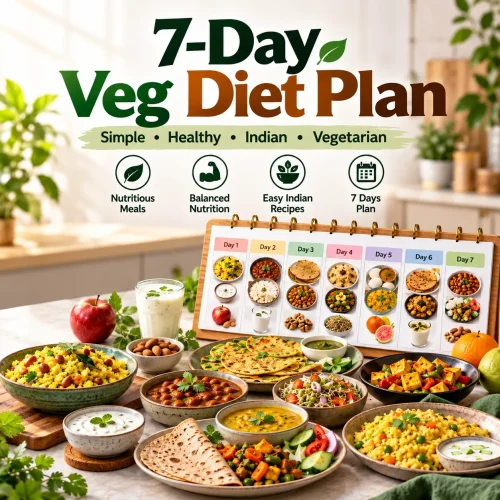
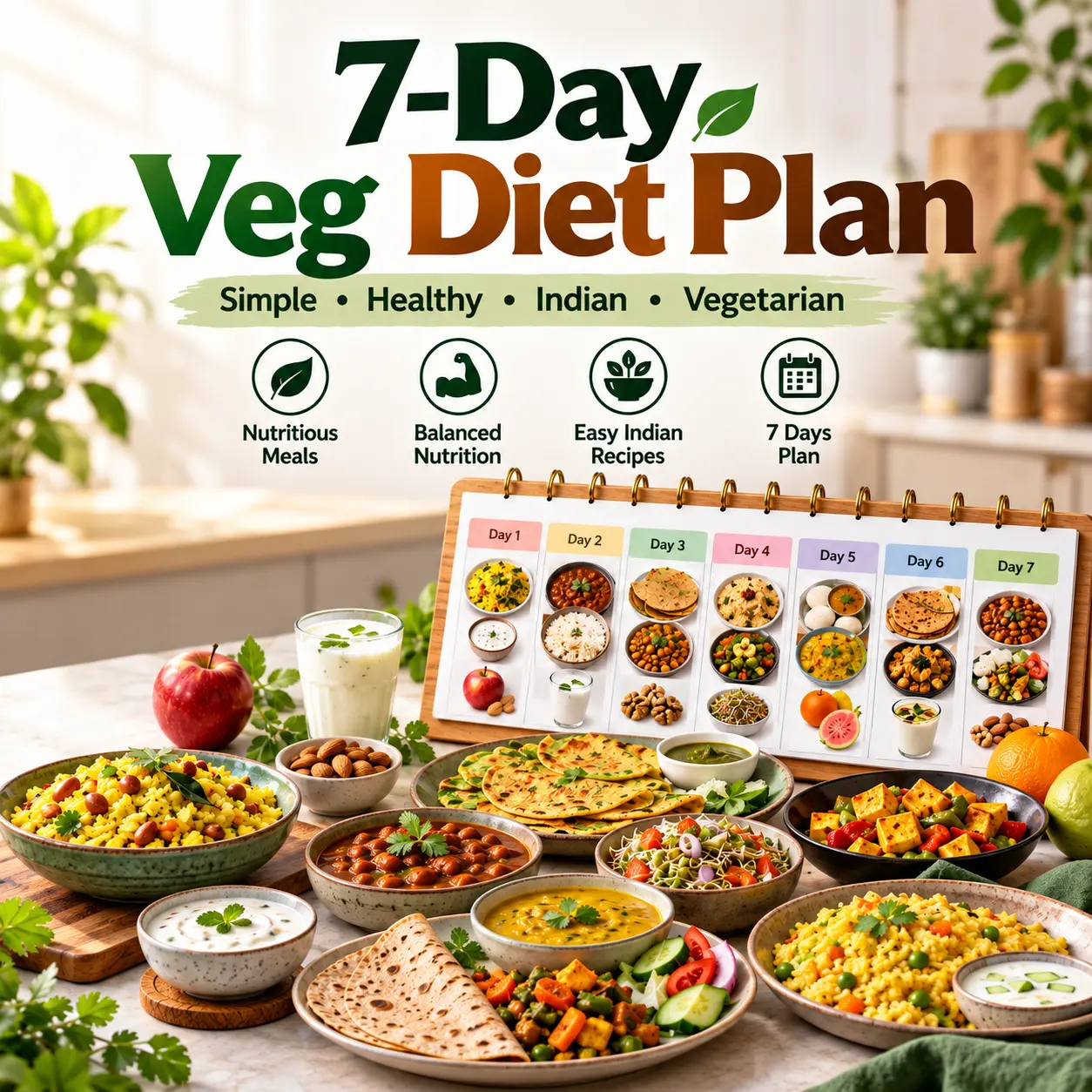


A vegetarian diet does not imply having to eat the same dish made with dal, salad, or other vegetables each day. It is possible to enjoy diverse vegetarian meals that are nutrient-packed provided you make proper plans. In this 7 day diet plan, commonly known Indian ingredients like dal, paneer, curd, chickpeas, rajma, vegetables, pulses, fruits, and nuts have been used. This diet plan does not aim at drastic reduction of calories but a basic template to construct nutritious vegetarian meals.
The amount of food intake may differ based on various factors including age and health goals of the individual.
Ingredients for a Nutritious Veg Diet?
A nutritious veg diet not only means excluding all forms of meat from your meal but also having different food categories providing enough amount of proteins, carbohydrates, good fats, vitamins, minerals, and fiber.
A balanced vegetarian diet may consist of:
- Vegetables and salads
- Fresh fruits
- Grains like whole wheat, oats, and brown rice
- Legumes and pulses such as dal, rajma, and chickpeas
- Dairy products like milk, curd, paneer, etc.
- Soy products like tofu and soybeans
- Nuts and seeds
In Indian vegetarians’ diets, mixing grains with legumes, like rice mixed with dal or roti with chickpeas, also help in making the quality of protein intake better.
7-Day Veg Diet Plan
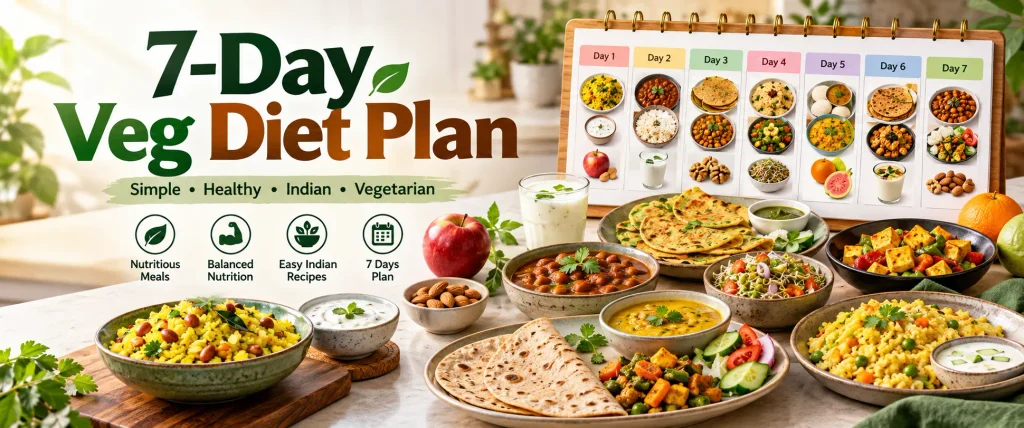
Here is a practical 7-day veg diet plan using foods that are easy to include in an Indian household.
| Day | Breakfast | Lunch | Snack | Dinner |
|---|---|---|---|---|
| Day 1 | Vegetable poha with peanuts + curd | 2 whole-wheat rotis + moong dal + mixed vegetable sabzi + salad | Apple + handful of almonds | Vegetable khichdi + cucumber raita |
| Day 2 | Oats with milk, banana, and chia seeds | Rajma + rice + cucumber and tomato salad | Roasted chana + buttermilk | 2 rotis + paneer bhurji + sautéed vegetables |
| Day 3 | 2 besan chillas with vegetables + curd | 2 rotis + chana masala + seasonal vegetable + salad | Fruit + handful of walnuts | Moong dal + rice + mixed vegetable salad |
| Day 4 | Vegetable upma + glass of milk | 2 rotis + palak paneer + curd + salad | Sprouts chaat | Vegetable dalia + raita |
| Day 5 | Idli + sambar + vegetables | Rice + mixed dal + vegetable sabzi + salad | Guava or orange + roasted peanuts | 2 rotis + tofu/paneer vegetable stir-fry |
| Day 6 | Paneer or vegetable stuffed roti + curd | 2 rotis + rajma + mixed vegetables + salad | Makhana + unsweetened lassi | Moong dal khichdi + vegetables + curd |
| Day 7 | Moong dal chilla + paneer filling | Chole + 2 rotis + salad + curd | Seasonal fruit + mixed nuts | Dal + 2 rotis + seasonal vegetable + salad |
Change the Plan According to Your Requirements
The meal plan mentioned above is not an absolute guide but a general guideline. An individual who needs more calories will require larger meals and perhaps even snacks. On the other hand, if your energy expenditure is less, you might require smaller portion sizes.
You can make some changes in the meals based on the availability of foods and keep it varied rather than stick to every meal mentioned above.
Important Nutrients that Should be Part of Your Veg Diet
A properly balanced veg diet will contain many nutrients; however, certain nutrients deserve special mention.
Protein
Ensure that you have protein foods through the day in place of having one complete meal of protein-rich foods. Sources of protein in veg diets are dal, chickpeas, rajma, soybeans, tofu, paneer, curd, sprouts, nuts, and seeds.
Iron
Iron can be obtained from plants such as pulses, green leafy vegetables, sesame seeds, nuts, and fortified foods. You can increase the absorption of iron by taking vitamin C rich foods like amla, guava, oranges, tomatoes, and lemons.
Calcium
Milk, cheese, and paneer would provide the supply of calcium to someone who eats dairy products. Fortified alternative sources of milk and some leafy green vegetables may contribute to calcium.
Vitamin B12
Since vitamin B12 does not have many natural plant sources and since it is essential to pay special attention to it while on a vegetarian or vegan diet. Consultation of health care professionals is required.
Healthy Fats
Nuts, seeds, peanut butter, flaxseeds, chia seeds, and walnuts may add healthy fats to a vegetarian diet. Diversity is important to obtain fats of different origins and other micronutrients.
Points to Remember While Following the 7-Day Veg Diet Plan
Sustainability is more important for an ideal diet than sticking to the plan for exactly seven days.
- Eat protein at each major meal time. Some examples are dal, beans, paneer, tofu, curd, soy, or something else which is rich in proteins.
- Opt for natural foods in your daily routine. Fruits, vegetables, pulses, whole grain foods, nuts, and seeds are preferred over processed foods.
- Hydrate properly. Fluid requirement varies with climate and physical activities.
- Manage portion sizes wisely. Even nutritious foods provide us with energy, so take them in amounts required by you.
- Plan beforehand. Cooking dal, steamed chickpeas, cut up veggies, curd, or healthy snacks will help you easily follow the 7-day veg diet plan.
- Don’t give up carbohydrate food unnecessarily. Rice, roti, oats, and other cereals may be included in a balanced diet when portion size is taken care of.
Who Needs To Change The Veg Diet?
The proposed veg diet for 7 days is a general healthy eating pattern that cannot serve as a personal medical diet.
Children, senior citizens, athletes, people who are either pregnant or breastfeeding, and those suffering from diseases such as diabetes, kidney disease, digestive disorders, nutritional deficiencies, food allergies, and other diseases have different needs in nutrition.
In case you suffer from a particular disease, take medications that can interact with your diet, or need
Frequently Asked Questions
Is Veg Diet Healthy?
Yes. The right vegetarian diet can be considered healthy, because it should consist of vegetables, fruits, grains, pulses, protein, healthy fats, and the sources of all necessary micronutrients. It is not healthy just to eliminate meat products and do nothing else.
Can I Get All The Protein On My Vegetarian Diet?
Yes. Such products as lentils, chickpeas, beans, soy, tofu, paneer, milk, curd, nuts, and seeds contain protein. Therefore, it is important to consume various protein sources during the day.
Can I use this 7-day veg diet plan to lose weight?
The items in the mentioned diet can be incorporated into the weight loss diet plan, however, weight loss will mainly depend on your total energy intake, portion sizes, physical activity, and personal needs. Rather than cutting down significantly on foods during a period of seven days, adopt healthy eating practices that you will continue for a long time.