
Introduction
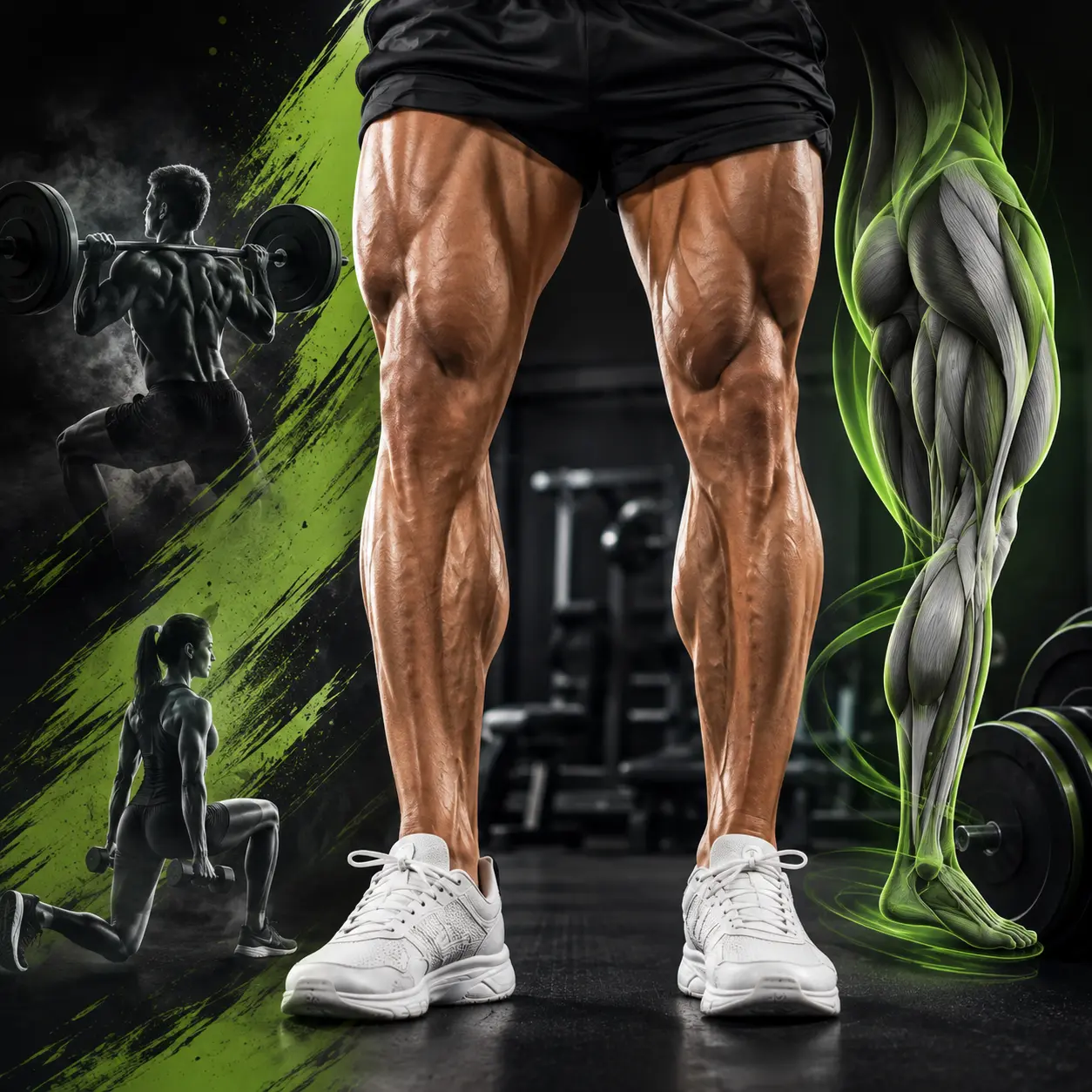
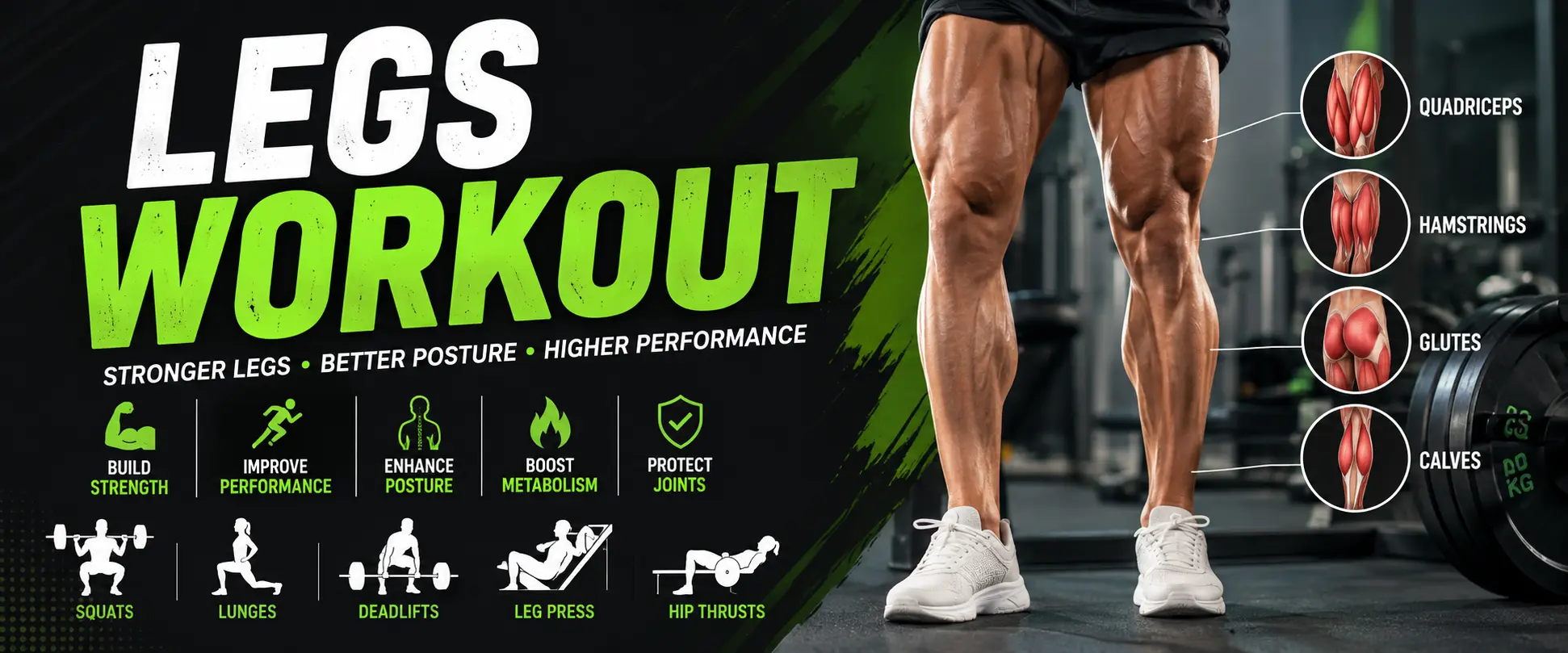
For developing an optimal physique, it is necessary to have an excellent legs workout. Unfortunately, legs workout day becomes the most neglected day for the majority of people, but you should note that your legs contain some of the largest muscles in your body, such as the quadriceps, hamstrings, glutes, and calves. Legs workout not only develop your physique but improves your posture, increase your metabolism rate and keeps your knees, hips, and lower back muscles protected from everyday strain.
This article will allow you to learn about the importance of a legs workout, effective leg exercises for everyone, how to create a workout for legs in a gym, some essential stretches for your legs, as well as how to fit a workout for legs into your workout routine.
Why a Legs Workout Should Have a Spot on Your Schedule
Overlooking leg day is the most common blunder that people make when it comes to workouts. Your legs account for almost half of your muscle mass, and thus failing to work on them will mean that you miss out on a lot of things. Working on your legs makes sure that the largest muscles in your body contract, increasing heart rate and the release of growth hormones.
Legs not only help improve your looks but also help you gain better balance and be less prone to falls. Plus, it will also enhance your running, jumping, and lifting abilities.
Best Exercises for Your Legs in All Fitness Levels
Everyone does not have the same requirements, and that is why certain exercises may not be applicable to everyone.
Beginner Leg Exercise Choices
If you are a beginner, you need to start with body-weight or light resistance training exercises:
- Bodyweight Squats – This exercise builds up the quads, glutes and hamstrings, while establishing good form patterns.
- Glute Bridge – Activates the glutes and lower back with low joint involvement.
- Walking Lunge – It improves balance and helps in developing single-leg strength.
- Calf Raise – It strengthens the ankles and lower leg muscles.
The best thing about such exercises is that you don’t have to use much equipment, and they can be performed at home, before moving ahead with your complete legs workout routine.
Advanced Legs Exercise Moves
When you have gained good form patterns, try out some weighted or compound exercises:
- Barbell Back Squats – It is one of the most important exercises to build overall leg strength.
- Romanian Deadlift – Targets hamstrings and glutes along with hip hinge mechanics.
- Leg Press – Provides maximum loading without increased spinal load.
- Bulgarian Split Squat – Develops unilateral strength.
- Hip Thrust – It is one of the best glute exercises.
Rotation of exercises after every few weeks will keep your muscles engaged.
Exercise Options for Legs for Beginners
If you are a beginner, then you have to perform the following bodyweight or light resistance exercises:
- Bodyweight Squats – It increases the strength of the quads, glutes and hamstrings as well as establishes good form patterns.
- Glute Bridge – It targets the glutes and lower back region through low joint involvement.
- Walking Lunge – It enhances balance and improves strength of the single leg.
- Calf Raise – It strengthens ankles and lower legs.
These exercises do not involve much equipment and they can be done at home before proceeding with legs workout routine.
Exercise Options for Legs in Advanced People
As soon as you develop good form patterns, perform the following weighted or compound exercises:
- Barbell Back Squats – It is considered one of the best exercises for overall leg strength.
- Romanian Deadlift – It focuses on hamstrings and glutes as well as teaches proper hip hinge mechanics.
- Leg Press – It offers maximum loading without spinal stress.
- Bulgarian Split Squat – Unilateral strength is developed by this exercise.
- Hip Thrust – It is one of the best glute exercises.
Rotation of exercises every few weeks is essential for engaging muscles.
Leg Stretching Exercises Pre and Post Workout
Stretching is the least emphasized part of leg training. But it is one of the most vital things that have to be done before or during the workout as it improves the elasticity of the muscles and reduces muscle soreness while ensuring proper joint movement in the hip and knee joints.
Here is the list of dynamic leg stretches to perform before workouts. These include leg swings, walking knee hugs, and body-weight lunges with twists. It helps to prepare the muscles without reducing strength production.
On the other hand, static stretching should be performed after a workout:
- Quad Stretch – Hold for 20-30 seconds each side.
- Hamstring Stretch – Lean forward gently without rounding your back.
- Glute Stretch in Figure Four Position – Relieves tension in the hips and glutes.
- Calf Stretch Against a Wall – Prevents calves from tightening after presses or running.
Consistent performance of these stretches after workouts decreases post-workout stiffness significantly.
Creating a Comprehensive Legs Workout Routine
Leg day training alone does not make sense, as it should be incorporated into the overall workout routine in which you train your upper body, core and even allow yourself some days off for recovery purposes. Here is how you can distribute your workouts throughout the week:
| Day | Workout |
|---|---|
| Day 1 | Leg Day Training (Quadriceps Focused) |
| Day 2 | Upper Body Push (Training Your Chest, Shoulders, Triceps) |
| Day 3 | Rest or Recovery Day |
| Day 4 | Upper Body Pull (Training Your Back, Biceps) |
| Day 5 | Leg Day Training (Hamstrings, Glutes Focused) |
| Day 6 | Core and Mobility Training |
| Day 7 | Rest Day |
Such a comprehensive workout routine provides ample recovery time for your legs while giving enough time to train them regularly.
Example from Practice: Transforming Weaknesses into Strengths in the Client’s Legs
Riya, an expert personal trainer at the private gym in Punjab, told how she helped her client overcome pain in the knees when doing squats for several months. Instead of forcing the client, Riya completely redesigned the training program. Initially, the client performed glute bridges and box squats, then she added barbell squats gradually over eight weeks.
Thanks to a combination of strength training and regular leg day stretches, the client not only got rid of the problem but also managed to increase the weight of the squat exercise by 35% in three months. This case is a vivid example of how properly planned and designed movements always outperform struggling with pain.
Common Mistakes You Make at the Legs Workout day
Even the most experienced athletes often do that on leg day:
- No warm-ups – Cold muscles get injured more easily.
- Using momentum instead of control – In particular, while doing squats and lunges.
- Ignoring hamstrings and glutes – Working out only quads leads to muscle imbalance.
- Ego lifting – Increasing the load without proper technique is dangerous.
- No rest days – Muscle growth takes place not during workout but in between sessions.
Frequently Asked Questions (FAQ)
The most beneficial regime for legs is to train two to three times per week while leaving at least 48 hours of break to recover from training.
In case of constant knee pain, it is recommended to decrease the amplitude of exercise execution, opt for low impact exercises, such as glute bridges or leg press and seek medical advice before doing squats or lunges.
No. While progressive overload is necessary for building muscle, bodyweight and moderate resistance exercises are also very efficient.
It is not harmful to not stretch legs after workouts but it increases the chances of tight muscles, stiffness, and pain, therefore, it is advisable to spend at least five to ten minutes stretching after workouts.
Beginners can use the same full workout program as advanced lifters with time when they have improved on their strength, technique, and confidence.
In six to eight weeks, one can start seeing muscle and strength improvements with proper training and nutrition.