
What Are Shoulder Muscles?
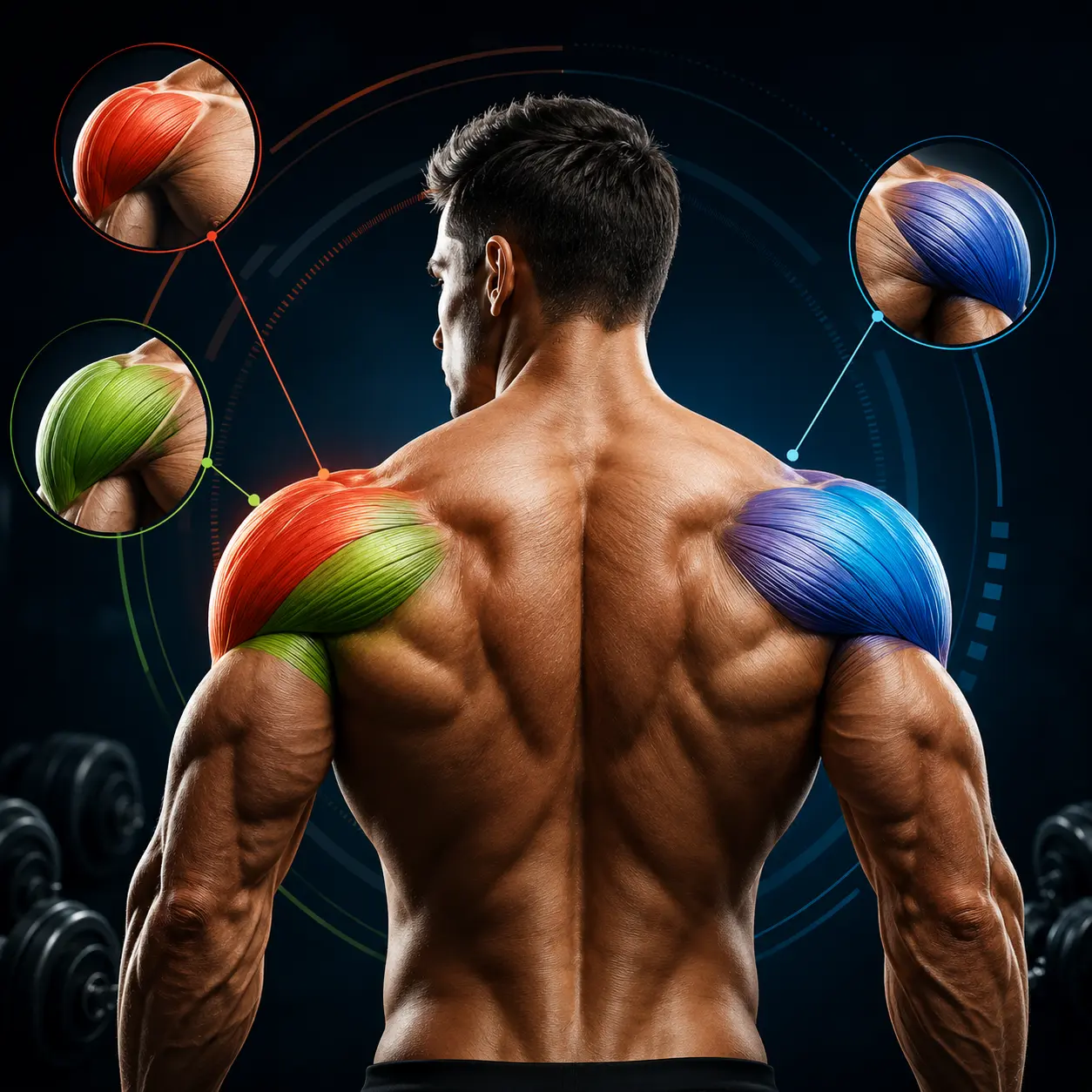
Shoulder Muscles joint is one of the most complicated and flexible joints in the human body and a good shoulder workout can make them stronger. It consists of three main muscles:
- Anterior (front Delt)
- Lateral (side Delt)
- Posterior (rear Delt)
No matter whether you carry grocery bags, throw a ball or lift weights above your head, your shoulder muscles are actively involved in your activity. This is the reason why doing shoulder exercises is not only about appearance but rather functional strength and injury prevention.
At befitin.com, we are sure that the more you understand about your muscles, the better you will be able to train them. This is why we decided to share everything you should know about shoulder muscles.
Understanding the Anatomy Before Starting a Shoulder Workout
Prior to throwing on those weights on your barbell, it’s useful to have some understanding of what muscles you are training. The deltoids form a triangle shape and cover the top part of your arms. They enable you to do such movements as arm abduction, flexion and extension.
Rotator cuff muscles, although small and hardly noticeable, are crucial for stabilising the shoulder joint. Ignoring these muscles is the most frequent reason why people have long-term shoulder problems.
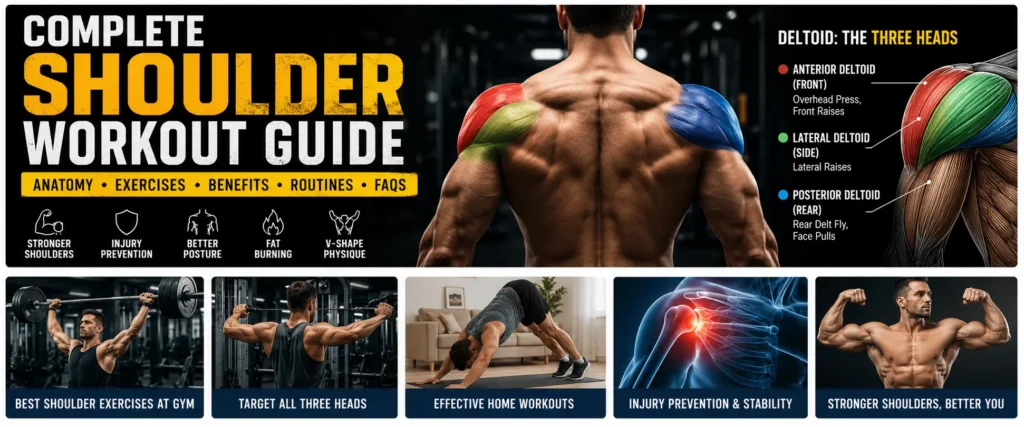
Deltoid: The Three Separate Parts
Anterior deltoid
This muscle gets trained when you do the overhead press or front raises.
Lateral deltoid
This is the muscle that makes you have a “capped” shoulder appearance and is best trained with lateral raises.
Posterior deltoid
It is often ignored, yet it’s very important for proper posture and pulling movements.
Exercises in Shoulder Workout at Gym: Machine Assisted Training for Optimal Results
Best Shoulder Exercises in a Gym
Training in the gym gives you the benefit of using barbells, dumbbells, cables, and machines, which can be utilised to train your shoulders from different angles.
The following are some of the most effective shoulder exercises suggested by fitness trainers:
Rear Delt Fly (Machine or Dumbbells)
An effective exercise for strengthening the posterior deltoids.
Barbell Overhead Press
Barbell overhead press is the king of all shoulder exercises. This exercise targets the anterior and lateral deltoids while engaging your triceps and upper chest. Start with a light load, brace your core, and perform the exercise with an overhead press.
Seated Dumbbell Press
It is a controlled exercise to minimize lower back stress and help beginners focus on shoulder muscles.
Cable Face Pull
Face pull exercise is very important to strengthen your rear deltoids and rotator cuff. Perform this exercise with a rope attachment on the cable machine.
Expert Real-Life Example
Coach Rahul Sharma, a certified coach specialist from Mumbai with over 10 years of experience, advises his athletes:
“Most people walk into the gym and only do front raises and overhead presses. They completely skip their rear delts. I always tell my clients — if you want healthy, injury-free shoulders, the cable face pull and rear delt fly are non-negotiable parts of every shoulder workout at the gym.”
Home Shoulder Workout: No Equipment? No Problem!
Good Exercises That Require No Equipment
Having a shoulder workout at home that uses body weight or little equipment is possible without having to be a gym member. Such shoulder workouts can be highly effective for beginners and intermediate trainees.
Dumbbell Shoulder Press (If you have dumbbells at home)
Even a couple of light dumbbells at home will provide you with a perfect shoulder workout at home.
Pike Push Up
This variation of the regular push-up will shift the weight onto your shoulders. From the starting position of the downward dog, bring your head towards the floor and come back. This exercise is superb for the anterior deltoids.
Plank to Downward Dog
This movement will target your whole shoulder girdle and increase stability.
Wall Handstand Hold
With more training experience, the handstand against the wall will be an incredible exercise for shoulder strength and stability, which also works on the core muscles.
Resistance Band Lateral Raise
This tool is inexpensive and can be used for a highly efficient replacement of lateral raises in a gym.
Expert Real-Life Example
Fitness coach Priya Menon, who trains working professionals in Bengaluru, shares:
“During the lockdown period, I had clients building better shoulder definition at home than they ever did at the gym. The secret? Consistency and correct form. A 20-minute shoulder workout at home done properly beats a 60-minute gym session with poor technique every single time.”
Benefits of Working Out the Shoulders
Why Your Shoulders Workout Routines Deserve Your Undivided Attention
Here are the top physical and functional benefits of training your shoulders:
Fat Burning
Due to the great size of the deltoids, their training increases metabolic activity.
Good Posture
The development of the posterior deltoid and rotator cuff muscles helps keep your shoulders in place by pulling them back and thus preventing that forward-hunching of the shoulders resulting from prolonged sitting at a desk.
Improved Upper Body Strength
As almost any upper body exercise implies pushing, pulling or lifting of weight, training the shoulders greatly impacts your results in those exercises, such as the bench press, pull-ups and rows.
Prevention of Injury
The frequent shoulder workout increases your chances of not injuring the rotator cuff muscle group due to the higher flexibility and strength of these muscles.
Improving Sports Performance
Many athletes use their shoulders for explosive actions like boxers and cricketers, as well as for endurance actions in swimmers and tennis players.
Appealing Appearance
The broad and defined shoulders create the V-shape of your torso, making it look slimmer.
How to Structure a Weekly Shoulder Workout Routine
A balanced training plan should include your shoulder workout 1–2 times per week with adequate rest in between.
| Day | Focus |
|---|---|
| Monday | Chest + Front Delts |
| Wednesday | Back + Rear Delts |
| Friday | Dedicated Shoulder Workout (All Three Heads) |
On your dedicated shoulder day, aim for 4–5 exercises that target the anterior, lateral, and posterior deltoids. Keep the rep range between 8 to 15 reps for muscle hypertrophy and 15–20 reps for endurance and definition.
Avoiding Common Shoulder Workout Mistakes
- Lifting heavy weights: Ego lifting during lateral raises is often one of the common sources of shoulder injury. Lifting light weights in proper form will be better.
- Skipping warm-up routine: It is recommended that you warm up your rotator cuffs through band pull-aparts and arm circles prior to heavy pressing exercises.
- Overworking: Your shoulder muscles work hard during chest and back workouts. Overworking shoulders by adding extra sets results to fatigue and injuries.
Frequently Asked Questions (FAQs)
The most recommended frequency of shoulder workouts is 1-2 days per week as this gives the shoulder muscles some rest, considering that the shoulder muscles are also targeted in chest and back workouts.
Safety Precaution: In case there is a documented rotator cuff injury, you should not engage in any overhead pressing exercises until you get clearance from a physiotherapist or a sports medicine physician. Rotator cuff strengthening exercises such as band external rotation can be allowed.
Safety Precaution: Absolutely not. Beginners should always begin with low- to moderate weight lifts so as to develop their movement patterns. This is because heavy lifts increase the risk of shoulder impingement.
It would be great to use Pike push-ups, wall handstands, and plank to downward dogs. Incorporating resistance bands into your workout routine also helps to improve your fitness level greatly without spending money on equipment.
If you train 2 times a week with proper nutrition, the results can be seen within 8–12 weeks.
For elderly individuals, there are four main shoulder workout benefits, namely improved joint stability, better posture, a lower chance of developing rotator cuff injuries, and better ability to perform everyday activities.
Disclaimer: This article is for informational purposes only. Always consult a certified fitness professional or medical expert before starting any new exercise program, especially if you have pre-existing injuries or health conditions.